
Gambling Commission Wikipedia
The increase in Category B machines will enable bingo halls to better meet customer demand and will likely result in greater GGY. This would result in an overall decrease of over 900 cabinet machines across these venues, predominantly consisting of legacy Category C cabinets. Also, Category C and D gaming machine device types made available for use must be of similar size and scale to Category B. For example, some options may place further emphasis on achieving commercial flexibility than achieving customer choice of higher and lower staking machines, and vice versa. Gambling Commission data, from April to September 2019, indicates that across all land-based sectors, 1.8% of Category B sessions result in a loss of £200 or more.
Providing facilities without a licence is a criminal offence under section 33 of the Gambling Act 2005, and advertising unlawful gambling to Great Britain consumers is also a criminal offence. After the Gambling (Licensing and Advertising) Act 2014, an operator generally needs a UKGC licence if its remote gambling facilities are used in Great Britain and the operator knows or should know that British consumers are likely to use them, even if the operator is located overseas. The UK gambling industry is in the middle of its largest tax and policy recalibration in over a decade. You are responsible for verifying your local laws before participating in online gambling. For players, it may help support the financial viability of land-based bingo venues, although it does not affect gambling rules or consumer protections.
Industry Response and Compliance Challenges

The Gambling Commission will review and consult on updating design rules for online products, building on its recent work on online slots to consider features like speed of play which can exacerbate intensity and risk. In general, this government agrees with the principle that people should be free to spend their money how they see fit, so we propose a targeted system of financial risk checks that is proportionate to the risk of harm occurring. Gambling can also contribute to tourism, for instance to seaside towns across the country, or high-end casinos attracting wealthy overseas visitors who spend across a number of other sectors while in this country. The gambling sector also contributes significantly to other industries, including sport, advertising and racing. There are also benefits to gambling which should be weighed in decision making, although they do not negate the need to prevent gambling-related harm.
- This will ensure that casinos continue to offer a variety of gaming and non-gaming activities for customers while at the same time allowing a greater number of machines to be sited on the premises.
- Evidence and proposals regarding age and identity verification to access and make deposits into online gambling accounts are covered in our proposals for online gambling in Chapter 1.
- Licensing authorities have a wide range of powers under the 2005 Act to refuse or place conditions on applications for gambling premises licences where there is cause for concern, and we fully support use of these powers.
- For example, Westminster City Council recently published a comprehensive policy statement that uses a range of evidence to specify those parts of its licensing area which are particularly vulnerable to gambling-related harm.
We will jointly organise a series of workshops later this year with researchers, third sector partners and the Gambling Commission to stimulate interest in the gambling research field. We will consult on how the levy will be constructed, including the rate at which it will be set and the total amount to be raised. We will review the Commission’s licence fees to ensure it has the resources to continue its transformation and deliver on the commitments across this white paper. The Commission has been taking steps to ensure it can effectively respond to novel products which blur the line between gambling and other areas and will continue work in this area.
If they are perceived as permitting ‘risk-free’ gambling by providing a mechanism to subsequently recoup losses, this would risk reinforcing negative and harmful behaviours. Alternatively, we have heard that some operators make payments directly to fund the complainant’s treatment, education regarding the risks of gambling and the support available, or to cover outstanding debts rather than providing a lump sum. A memorandum of understanding between the Financial Ombudsman Service and the Financial Conduct Authority (FCA), for example, requires that information on complaints data, including any trends and common problems, is shared with the FCA so that both organisations can serve customers effectively. Many stakeholders, including Parliamentary and campaign groups, as well as those with personal experience, said that an ombudsman must be demonstrably independent of the Commission and the gambling industry. We received submissions from a wide range of stakeholders including trade bodies, charities, researchers, treatment and support service providers, organisations in the dispute resolution landscape, and from across the gambling industry. This includes, for example, complaints that an operator allowed a self-excluded customer to gamble, or should have taken greater steps to identify a customer at risk of harm and stepped in earlier to prevent unaffordable gambling.
Free-to-play casino games with prizes are regulated by the Gambling Commission (licence required). The Gambling Commission has a range of powers, including the ability under the Gambling Act 2005 to investigate and bring prosecutions against those that provide unlicensed gambling facilities to consumers in Britain. The legal approach is to completely criminalise gambling but then to make exceptions for persons who comply with the licensing regime, pay the applicable tax, observe the applicable regulation and so on.

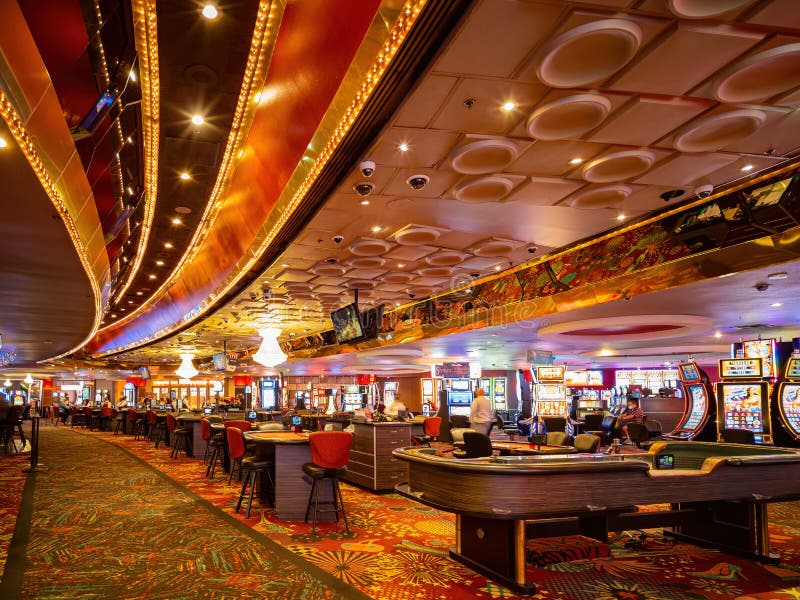
Seven operators replied to this section of the consultation, some of which account for multiple venues and a significant proportion of the land-based casino sector. A sliding scale was proposed in the consultation which detailed potential requirements across (i) gambling space; (ii) table gaming space; (iii) non-gambling area; and (iv) machine to table ratio. The consultation proposed a number of measures with a view to modernising the regulation that applies to land-based casinos. All casinos will be allowed to offer betting, which was previously restricted to 2005 Act casinos.
Having an ombudsman in the gambling sector which can deal with social responsibility complaints and whose remit is signposted clearly would be an important first step towards a new approach to consumer redress. These bodies have been approved on the basis that they fulfil requirements under current legislation and the Gambling Commission’s improved standards, ensuring customers get the protections they are entitled to. There are eight providers of ADR for gambling, most of which also operate in other sectors with some performing functions outside of complaint handling too.
The Access to Cash review, an independent study commissioned by the body that runs the UK’s ATM network, finds that cash use could fall to just 10% of all payments by 2035. Using an estimated energy cost per machine of approximately £1,600 per year, this could result in an approximate annual energy saving of £16 million to £19 million. For two key proposals where we have not been able to quantify the impact due to limited evidence, we have made reasonable inferences instead.
All casinos that operate in the UK, whether they’re on the internet or land base, must be licensed and regulated. From a gambling point of view you’d be much wiser to take your money to a casino where the house edge can be up to fifty times smaller. The next major legislative overhaul came in 2005 with a new Gambling Act that addressed online gambling as well as further loosened regulations across the board. The Gaming Act of relaxed the original rules and paved the way for more casinos. The first casino was opened in 1961 by gaming magnate George Alfred James. There are serious consequences for failing to meet the gambling age in the UK, including denying you your winnings if they find out.

There are various license types, including remote casino, remote betting, and land-based licenses. The Gambling Commission’s Notice essentially makes clear that those B2B operators have a role in assisting the Gambling Commission in tackling unlicensed gambling in the British market and that such B2Bs place their own licence at risk by not taking sufficient steps to ensure that its content is only made available to British consumers via licensed B2C websites. Similarly, a centrally co-ordinated self-exclusion database (“GAMSTOP”) also allows customers to self-exclude from remote gambling offered by operators licensed by the Gambling Commission. In contrast with some jurisdictions, only casinos form part of the “regulated sector” for AML purposes, though all operators are required to conduct detailed risk assessments and implement AML policies, procedures and controls.
The register also shows enforcement history and which domains a licence covers. Licensed sites must display their licence details. Check the operator name or licence number from the site footer against the UKGC public register.
Restrictions on supply were originally viewed as an important protection in the 2005 Act, but in the light of the availability of remote gambling the characteristics of products and quality of monitoring have assumed greater importance. The Gambling Act Review white paper published in April 2023 set out the government’s plans for modernising the regulation of gambling in Great Britain. The Gambling Commission will take a closer look at how bonuses are constructed and targeted to prevent them being used in harmful ways and its work will inform new rules to stop dangerous practices. Bonus offers, such as free bets or spins, can drive harmful behaviour and trigger people to spend more than they intended. New powers will be given to the Gambling Commission to tackle and block unlicensed black market gambling firms from operating in the United Kingdom. Only about three percent of the highest spending accounts will have more detailed checks, similar to those carried out when people buy products through online credit agencies or sign up to some mobile phone contracts.
The current maximum amount of cash that can be inserted into a machine at one time is £50 as this is the highest denomination of bank note. Regulation 7 casinos not on gamestop ensures that there is a maximum value that players can deposit onto a machine in a single action. Regulation 9 also sets committed payment limits, money which cannot be refunded to the player once it is paid or transferred onto the machine’s credit or play meter. Regulation 7 of the Gaming Machine (Circumstances of Use) Regulations 2007 sets the financial (payment) limit on the amount a person can deposit on a machine in a single action. Completely removing the prohibition could also pose a risk to anti-money laundering compliance.
Other responses from outside of industry thought that the cooling-off period should be longer, with respondents stating either 60 or 120 seconds. There was consensus from industry that the length of the cooling-off period should be 30 seconds if these voluntary limits are hit. While Category D crane grabs may be a lower risk, they are more likely to be played by children and we think a cautious approach to debit card payments should be taken in general.
To further raise standards, a more prescriptive and risk-based model will be introduced, where remote operators are required to investigate the customer’s financial circumstances in response to certain loss triggers to understand if their gambling is likely to be harmful to them. However, while these tools are helpful for many online gamblers, they are not enough to fully mitigate the risks, so there are also a range of obligations on operators to identify and prevent gambling-related harm. All online play is account-based, and recent years have seen significant strides in the development of harm detection algorithms which monitor every aspect of a customer’s gambling to spot signs of risk and trigger interventions without human input. The proportion of people suffering harm might also be identified through other sources such as bank transaction analysis, hospital admission data, and operators’ own harm detection algorithms which flag the customers displaying indicators of harmful gambling. It also gives the Secretary of State the power to update specific provisions (such as the maximum stakes and prizes for gaming machines) and to set licence conditions via secondary legislation. A key concern for some of the land-based sectors is the ban on direct use of debit cards on gaming machines and we recognise that substantial changes are happening to how payments in society are being made.
October 2025: deposit limits became a “front door” moment
The machines may be of categories B3A, B4, C or D, but by agreement, only one machine can be of sub-category B3A. The code relates to the provision of facilities for gaming machine gambling and includes requirements around the protection of children and other vulnerable people. To take advantage of this entitlement, the holder of the on-premises alcohol licence must give notice to the licensing authority and pay the prescribed fee. They are divided into categories depending on the maximum stake and prize available, the nature of the prizes and the nature of gambling for which the machine may be used, as well as the premises where it may be used. Licensed bingo premises include a range of establishments such as retail bingo clubs, high street arcades (which have a smaller bingo offer via bingo machines), and bingo venues in holiday parks.

Affiliate marketing is a form of marketing whereby a third party receives a commission for promoting a company’s products or services, typically paid per customer referred or with a share of revenue generated by referred customers. It might also risk unintended consequences such as reducing the ability of consumers to distinguish licensed from unlicensed operators. While it is likely that this would reduce the limited level of children’s exposure to gambling adverts, there would be a negative impact on the ability of lotteries to fundraise for good causes, and a risk of adverse consequences from increasing the volume of late-night gambling adverts. It is also clear that children’s exposure to broadcast advertising has declined over the past decade, in all sectors including gambling.
As mentioned above, the existing regulations prohibit the use of debit cards for direct payments to gaming machines, and prohibit any use of credit cards. Over this same period, the weighted average weekly income from gaming machines for Landlord & Tenant pubs fell from around £215 to approximately £190, whilst for Managed pubs this fell from around £230 to approximately £180. Between 2019 and 2021, there was a decrease in the percentage of Landlord & Tenant pubs with gaming machines (from 60% to just over 40%), as well as a decrease in the percentage of Managed pubs with gaming machines (from 80% to around 65%).
Others cited research which has been undertaken on safer gambling messaging, including from the Behavioural Insights Team and the Personal Finance Research Centre (University of Bristol). Some respondents from outside of industry stated that safer gambling messages should be designed independently of industry and that some of the existing industry-led safer gambling messages are ineffective. Responses from industry stated that messaging similar to that which is already in place for cash transactions should be put in place, encouraging customers to take regular breaks, set and stick to budgets and to talk to staff and use player management tools. The overwhelming thrust of responses was that any messaging should be based on evidence.